
ADAS DEPOT | INDUSTRY INSIGHTS
Adding ADAS to Your Diagnostic Résumé: What Techs Say About Pay and Certification
What working technicians say about pay, certifications, and the realities of getting into ADAS calibration.
A diagnostic tech making around $80K a year recently posted on r/adastechs with a simple question: what are ADAS techs earning, and is a certification worth adding to the résumé? He mentioned that Autel’s courses run around $2,000 and wanted to know if the move pays off.
What ADAS Technicians Report Earning
None of this is survey data, so treat it as a snapshot of what techs in the field are willing to share. One tech with about three years at a national company reported roughly $92K a year on an hourly structure with a guaranteed eight hours a day, plus overtime when it’s available. He said new hires at his company typically start somewhere between $70K and $80K depending on the region. Another tech who does glass work alongside ADAS reported landing in the high $90Ks to around $100K.
Not everyone’s numbers looked that good. One commenter pointed out that some large companies pay a low base salary plus commission once you hit a sales threshold, which can mean a very different year than the headline number suggests. A tech in Colorado said their pay fell well short of what the cost of living there demands.
Pay structure matters as much as the figure itself. An hourly guarantee, a flat-rate setup, and a base-plus-commission plan can all produce the same “salary” on paper and very different paychecks in a slow month.
Do ADAS Certifications Matter to Employers?
The consensus was that certifications won’t hurt, but they aren’t what stops most people from getting hired. Outside of I-CAR’s ADAS training, the techs in the thread didn’t describe credentials as a gate with most employers.
I-CAR offers ADAS courses ranging from online modules to hands-on classes at its Chicago Technical Center. Its Static ADAS Calibration 3-Day Hands-On Skills Development course is the capstone for the ADAS Technician role, aimed at individuals pursuing Platinum recognition. Read more about the course in I-CAR’s announcement.
If you want a recognized credential on paper, ASE also offers an ADAS Specialist test (L4). To register, you need to have passed either the Automobile Electrical/Electronic Systems (A6) or Collision Mechanical and Electrical Components (B5) test. The credential also has to be renewed every five years through re-examination. Details and registration are available on the ASE test series page.
For a diagnostic tech who already holds A6, the ASE L4 ADAS Specialist test is the natural next step.
The Procedures Are Documented. The Rest Is the Hard Part.
The calibrations themselves are not what trips people up. Manufacturers publish clear instructions for when a calibration is needed, why, and how to perform it. The difficulty is everything around the procedure.
Techs described a steep early learning curve with OEM service information and scan tool software, especially at shops that expect you to work from factory data across many makes. Documentation is another big piece of the job, since calibrations need evidence to back them up, and insurers keep changing what they’ll pay for and how. Our ADAS insurance guide covers what to document. One tech called the paperwork possibly the hardest part of the work.
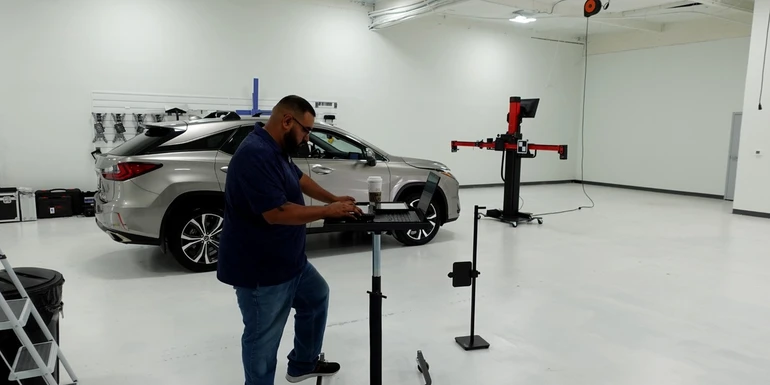
Then there’s the physical side. Static calibrations that need large target setups, like the Ford 360 procedure, take serious floor space. Another commenter noted that getting a shop to actually give you that space and perform every required step can be harder than the calibration itself.
Should You Pay $2,000 for an ADAS Course?
It depends on where you’re starting from. If your goal is a stronger résumé, a vendor course can help, but the thread suggests employers care more about whether you can work through OEM procedures, use scan tools confidently, and document your work properly. Before paying out of pocket, ask the shops you’d like to work for which credentials they recognize and whether they’d cover part of the training cost.
If you’re weighing a vendor course, the numbers in the thread line up with what’s out there. Autel’s Training Academy three-day onsite class is $1,895 and covers sensor identification, static and dynamic calibrations, troubleshooting, and OEM-aligned documentation practices. Hotel, meals, and shuttle are included, and attendees can earn I-CAR credits and complete Autel Academy ADAS Level 1 Certification.
Autel is upfront that this is an educational credential rather than a formal accreditation or licensing, so think of it as hands-on training with the tools rather than a license to practice.
For techs already in diagnostics, most of the skills carry over. The jump into ADAS is less about learning an entirely new discipline and more about building fluency with calibration equipment, OEM software, and the documentation habits that keep a shop paid and protected.
For Shop Owners Hiring ADAS Techs
A trained tech still needs the right equipment, a dedicated calibration bay, and a process for following OEM procedures from start to finish. Without the floor space and the workflow, the training goes unused.
If you’re building out or upgrading your ADAS capability, take a look at our complete ADAS packages or book a free consultation and we’ll help you figure out what your shop actually needs.
ADAS DEPOT | CALIBRATION SOLUTIONS
Ready to Build Your ADAS Capability?
Explore complete ADAS packages and find the equipment your shop needs to get started or expand its calibration services.
Explore ADAS PackagesADAS DEPOT | EQUIPMENT · SUPPLIES · EDUCATION
```
