
Walk into any dealership service department and you'll find one thing that independent shops often lack: the factory scan tool. That gap matters more than ever in today's vehicles, and if you're running a collision or mechanical repair shop, understanding why OEM diagnostic hardware and software set the standard could change how you approach every repair.
Full Vehicle Access Isn't Optional Anymore
Aftermarket scan tools have come a long way, but they still stop short of what factory tools can do. The fundamental difference is coverage. OEM scan tools are designed to communicate with every module on the vehicle — not just the powertrain and ABS controllers that most generic tools reach, but every single network node, including body control modules, advanced driver assistance systems, restraint control units, and gateway modules.
When a scan tool misses a module or returns delayed, inaccurate data, you're making repair decisions on incomplete information. That's a liability no shop can afford, and it's exactly the kind of gap OEM tools are built to eliminate.
Programming Is Now a Daily Operation
Plug-and-play module replacement is increasingly a thing of the past. Virtually every new module that enters a modern vehicle requires programming — either to accept the new unit or to update software on an existing one. OEM tools handle ECU flashing and reprogramming through the manufacturer's own protocols, which means the process is tested, validated, and supported. Attempting the same operation with a generic scan tool carries a real risk of corrupting the module, a scenario shops colloquially refer to as "bricking" a computer. Replacing a bricked module is expensive, time-consuming, and entirely avoidable.
Secure Gateways and Immobilizer Programming
Chrysler, Mercedes-Benz, Nissan, and a growing list of other manufacturers have introduced secure gateway modules that block unauthorized diagnostic access. Without the right credentials, a technician simply cannot clear codes, perform resets, or run active tests. OEM tools authenticate directly through the manufacturer's network, bypassing these restrictions entirely — no third-party workarounds required.
The same principle applies to key and immobilizer programming. Adding a new key or replacing a security module cannot be completed to factory specification without dealer-level tool access. In many cases, access to key programming functions also requires a NASTF Locksmith ID number, an additional credential that reflects how seriously manufacturers take access control on these systems.
The Documentation Angle: Liability and Insurance
Insurance carriers are paying closer attention to how collision repairs are documented. Pre- and post-repair scanning with OEM tools is increasingly specified — not just recommended — by insurers handling collision claims. The reason is straightforward: OEM tools produce documentation that reflects factory-level inspection of every system involved in the repair.
That documentation matters beyond the insurance claim. If a liability issue arises after a repair, having a paper trail that shows the vehicle was scanned and recalibrated with the factory tool — to the manufacturer's own specification — is a far more defensible position than records generated by a generic tool with partial coverage. Most manufacturers address this directly in their position statements and service documentation, specifying which tools are acceptable for diagnostic and calibration procedures.
TSBs, Topology Maps, and Integrated Service Info
One practical advantage that gets overlooked in the OEM-versus-aftermarket debate is workflow integration. Many OEM diagnostic platforms connect directly to Technical Service Bulletins (TSBs) and manufacturer-issued test plans for specific Diagnostic Trouble Codes. Instead of cross-referencing an external database, the technician gets the relevant service information within the same interface as the diagnostic scan.
Topology mapping is another feature that has become increasingly valuable as vehicle networks grow more complex. A visual network map showing how modules are communicating — and where a break in that communication is occurring — cuts diagnostic time significantly on electrical and network faults. Several OEM software platforms also include access to full service information as part of the subscription, which consolidates tools and reduces the number of separate resources a technician has to manage on any given job.
Getting Equipped: What ADAS Depot Carries
The challenge for independent shops has always been access — OEM hardware used to mean going through a dealer network or navigating manufacturer programs on your own. ADAS Depot stocks VCI hardware from the brands doing this work at the highest level, so shops can get equipped without the runaround.
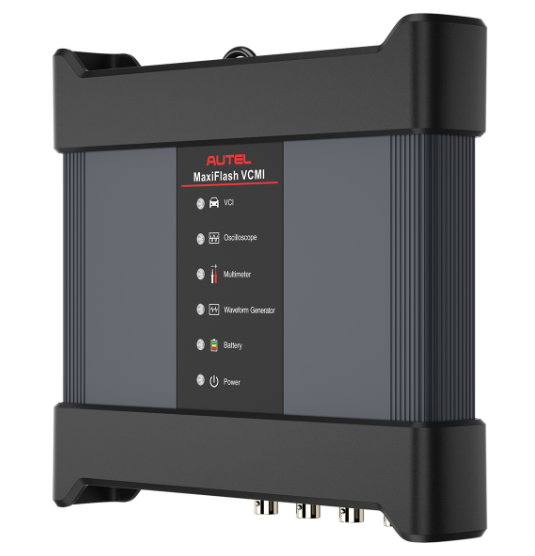
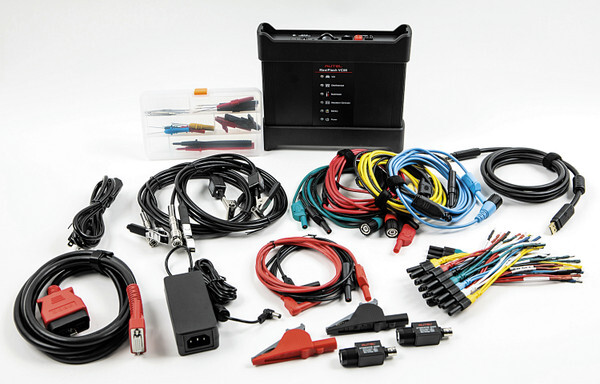
On the Autel side, the MaxiFLASH VCMI and MaxiFLASH VCMI Kit bring J2534 pass-through programming, a 4-channel oscilloscope, waveform generator, and CAN bus testing capability into one device. It pairs directly with the MaxiSYS Ultra-series tablets and supports CAN FD and DoIP — the protocols you'll encounter on late-model European and domestic vehicles.
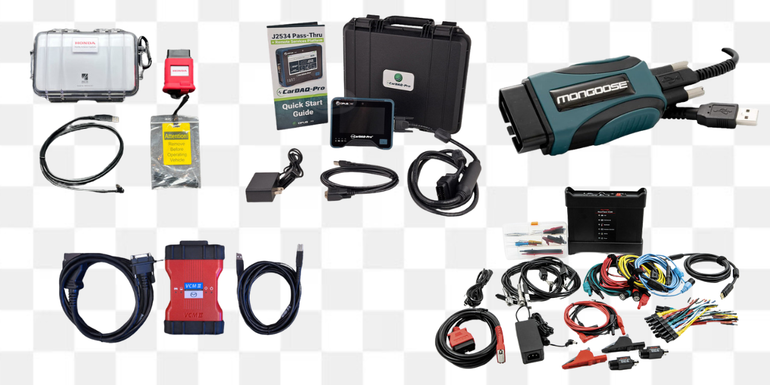
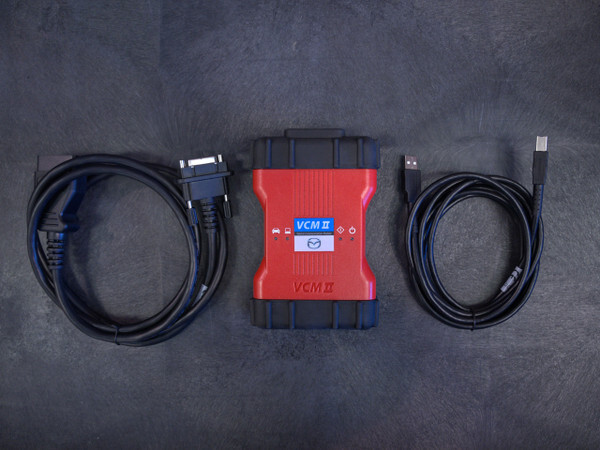
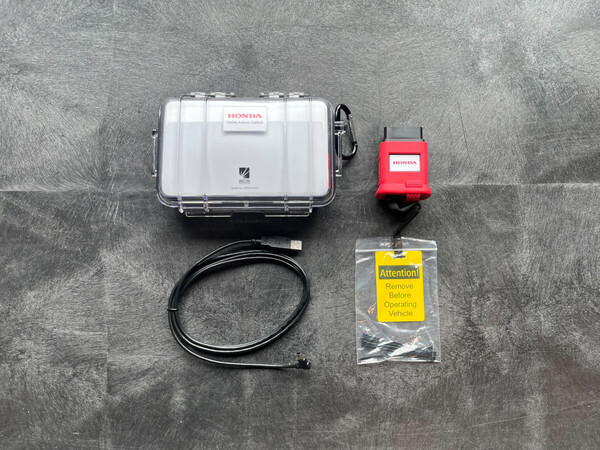
For shops that need true OEM-specific hardware, the OEM VCIs section carries the Mopar Diagnostic Pod Plus (MDP+) for Chrysler, Dodge, Jeep, and Ram vehicles, Honda Antares Capsule (HAC) Smart Vehicle Communication Interface Honda/Acura vehicles, Ford VCM 3 Hardware Dealer Kit for use with Fords IDS & FDRS on Ford/Lincoln vehicles, along with the Mazda VCM II Kit for use with Mazda IDS and MDARS. These are the same interfaces dealer technicians use, running the same software.
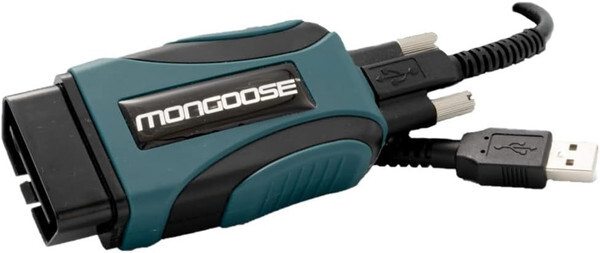
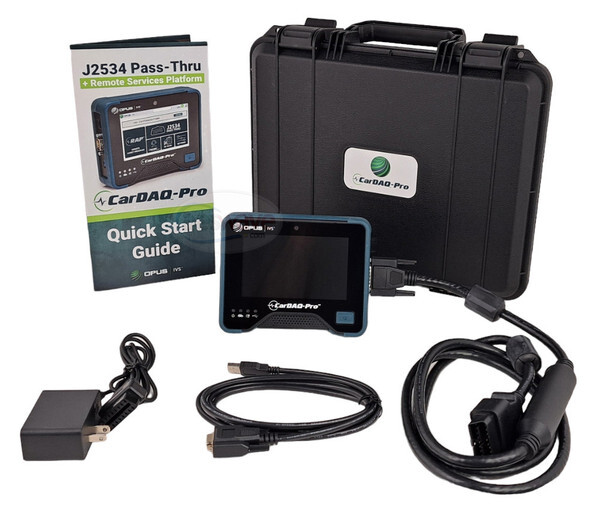
For shops working across multiple makes, Opus IVS is the most trusted name in multi-OEM J2534 pass-through. The CarDAQ-Plus 3 and CarDAQ-Pro 360 kits support a wide range of OEM software platforms with full J2534-1 and J2534-2 compliance, CAN FD, and DoIP. Opus also offers Remote Assisted Programming through the RAP2 and LivePro kits — meaning if you'd rather have an expert handle the programming session remotely while your tech does the physical work, that option is built into the product. Browse the full VCI / J2534 / OEM Hardware section to see what's available.
The Bottom Line for Independent Shops
The case for OEM diagnostic tools isn't abstract. It comes down to three things: the ability to do the job completely, the documentation to defend the work, and the manufacturer's own specification backing up the process. As vehicles become more software-dependent and ADAS systems become standard across the model lineup, the distance between what OEM tools can do and what aftermarket tools can do only grows wider.
For independent collision and repair shops competing in this environment, OEM scan tool capability isn't a luxury upgrade — it's the baseline for doing the job right.
