
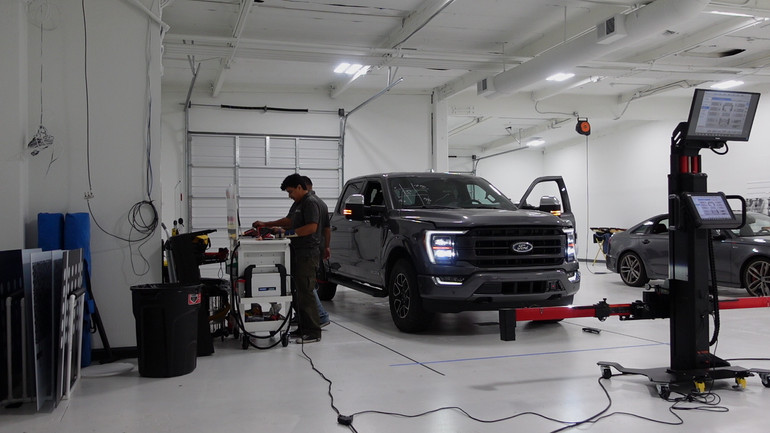
More shop owners are asking this question, and for good reason. As ADAS calibration becomes a serious revenue line rather than an occasional add-on, the business structure you use to run it matters more than most people initially realize. A growing number of shops are setting up a separate LLC specifically for their calibration operation, and the reasons go beyond tax planning.
This post outlines the practical case for doing it, the insurance dynamics involved, and the liability context that makes it especially relevant right now. It is not legal or financial advice. Every shop's situation is different, and you should work with your attorney and CPA before making any structural decisions.
What It Means to Sublet to Yourself
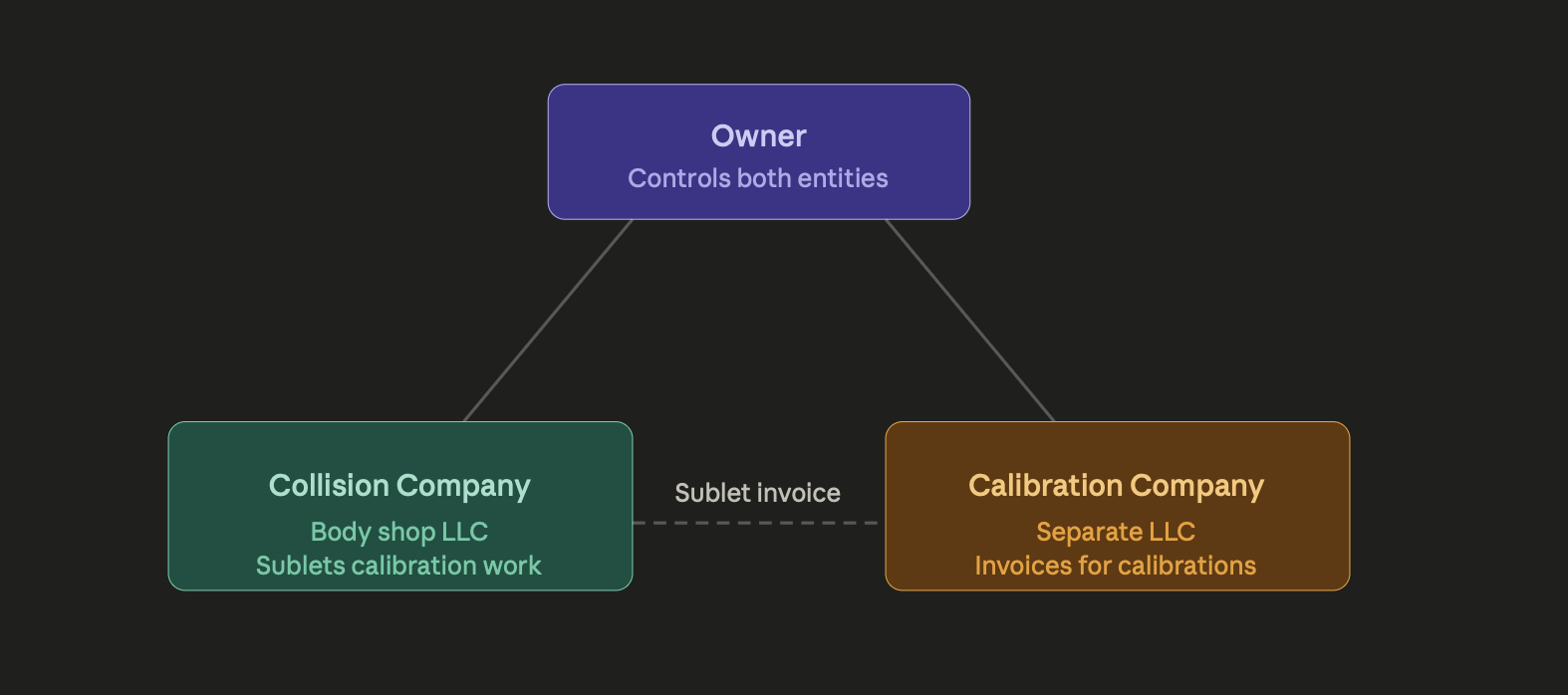
The basic setup is straightforward: your existing body shop or repair facility operates as one LLC, and your ADAS calibration operation runs as a separate LLC. When the body shop needs a calibration done, it sublets the work to the calibration LLC, just as it would if it were sending work to a third-party calibrator.
The calibration LLC invoices the body shop for the work, the body shop submits the sublet to the insurance company, and the calibration LLC receives payment. On paper, it functions like a normal sublet arrangement. The difference is that the same owner controls both entities.
Why Insurance Companies Tend to Pay Faster on Sublets
One of the most commonly cited reasons shops pursue this structure is reimbursement speed. Insurers are generally more accustomed to processing sublet line items on an estimate than they are to evaluating in-house calibration charges from a body shop. A sublet has a clear invoice attached to it from a named business entity, which fits neatly into the claims workflow insurers have built around outsourced labor.
When calibration is billed as an in-house service from a body shop, adjusters sometimes push back more, ask more questions, or apply different scrutiny. A separate LLC with its own invoice can streamline that process. This doesn't guarantee faster payment, and documentation quality still matters enormously, but the structural framing of the charge as a sublet can reduce friction at the claims level.
The Financial Case for Keeping It Separate
Beyond insurance dynamics, there are legitimate financial reasons to separate the two operations. A standalone calibration LLC can build its own profit and loss history, which is useful if you ever want to sell the calibration business, bring in a partner, or secure financing against it independently. It also allows you to track the true profitability of your ADAS operation without it being absorbed into the larger shop's numbers.
There are potential tax advantages as well, though these vary significantly depending on your situation, state, and how the entities are structured. This is where your CPA becomes essential. The decision between an LLC taxed as a pass-through versus an S-Corp, for example, can have meaningful implications for self-employment tax, and that calculation changes depending on how much the calibration operation is earning.
Ringfencing Liability: Why This Is Becoming More Important
The liability argument is where things get particularly relevant for ADAS specifically. Calibration is safety-critical work. A missed or incorrect calibration can have consequences that go well beyond a standard repair dispute, and the legal exposure that comes with that is real.
Maryland is currently considering Senate Bill 789, which would establish licensing requirements for businesses performing ADAS calibrations, mandate OEM-compliant procedures, require post-repair scans, and impose penalties of up to $5,000 per violation. Liability for improper work would fall on the repair facility. Maryland is likely an early indicator of where other states are heading.
If a calibration-related claim ever arises, having that work performed by a separate legal entity limits what can be attached to your primary business. The body shop's assets, accounts, and client relationships are not directly exposed to a claim against the calibration LLC. This is the concept of liability ringfencing, and it is one of the core reasons the LLC structure exists in the first place.
It's worth noting that this protection has limits. Courts can sometimes "pierce the corporate veil" if the two entities are not operated as genuinely separate businesses, which means separate bank accounts, separate bookkeeping, separate invoicing, and no commingling of funds. Running two real businesses, not just two names for the same operation, is what makes the structure defensible.
What Kind of Insurance Should the Calibration LLC Carry
A separate calibration LLC needs its own insurance coverage, not just a rider on the body shop's existing policy. At minimum, you'll want to discuss the following with your insurance broker.
General liability insurance covers bodily injury and property damage claims arising from your operations. For a calibration business, this is foundational. Professional liability insurance, sometimes called errors and omissions coverage, covers claims arising from mistakes in the work itself, including a calibration performed incorrectly that leads to a subsequent incident. This is particularly relevant given the safety stakes of ADAS work. Commercial auto coverage may be relevant if the calibration LLC operates mobile units. And if you're employing technicians under the calibration LLC, workers' compensation coverage applies there separately from your body shop.
The specifics of what coverage amounts make sense for your operation are a conversation for your broker, but the key point is that the calibration LLC should be insured as its own operating business, not as an extension of the shop next door.
Is This the Right Move for Your Shop?
The separate LLC structure makes the most sense for shops that are already doing meaningful calibration volume or are actively building toward it. If you're subletting everything out and haven't yet invested in equipment, this conversation is probably premature. But if you're bringing calibration in-house, hiring dedicated technicians, or positioning your operation as a serious calibration provider, the structural and liability benefits of a separate entity are worth taking seriously.
Talk to your attorney about how to set it up correctly. Talk to your CPA about the tax implications for your specific situation. And if you have questions about the equipment side of building a calibration operation that can stand on its own, ADAS Depot is here to help.
