
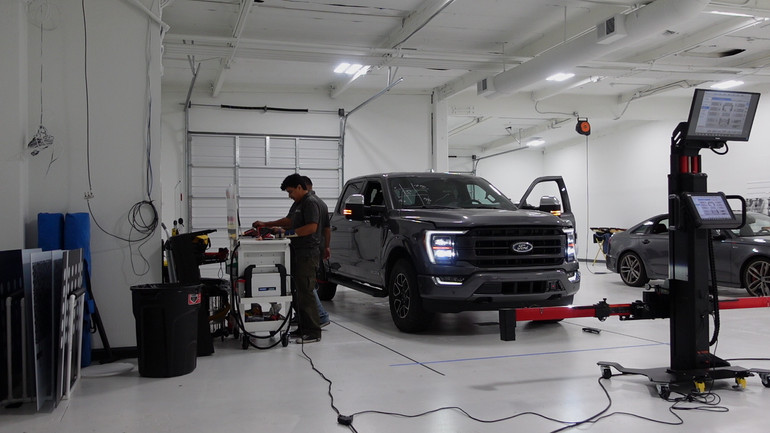
Rep. Diana Harshbarger’s ADAS Functionality and Integrity Act (H.R. 6688) was introduced on December 12, 2025 and referred to the House Energy and Commerce Committee. The bill is relatively short, and the key lobbying body, SEMA, has pushed it as a landmark step toward clarity, arguing that the industry lacks clear standards governing ADAS calibration and that the aftermarket needs access to calibration information and procedures to keep safety features functioning.
At ADAS Depot, our view is that the fight in ADAS calibration has never really been about whether a camera “needs” calibration: the fight is about what counts as proof that the system is back to a safe, predictable state.
Now there’s a federal bill that creates at least a framework and outlines some goals for a key regulator, the National Highway Traffic Safety Administration (NHTSA), to create standardization. The practical output resides in two requirements the bill directs it to build into guidelines (from the Bill H.R. 6688):
- “Proper calibration procedures of ADAS and other vehicle dynamic systems following repair, modification, or component replacement.”
- “Confirmatory test protocols and performance validation metrics that allow owners, service providers, and independent repair facilities to verify the operational integrity of ADAS after calibration.”
If those two ideas become law in federal guidance they redefine the boundary of what a “calibration job” is, from a process with hazy requirements, to a regulated procedure that also, and crucially here, needs to be verified. A job today is sold as: scan, identify required calibrations, set up targets, run routine, clear codes, document completion.
Now look at what H.R. 6688 is implicitly telling NHTSA to do (emphasis ours): “publish procedures and then create a way to verify operational integrity after calibration.” Verification is a different product than procedure; verification tells you whether it worked, in a way a third party can evaluate without having been in the bay.
The bill even defines the direction it wants NHTSA to take. It calls for a “confirmatory test” as “a standardized post-calibration vehicle test designed to validate system performance.” It instructs that the guidelines for calibration and confirmatory tests should “reference or expand upon methodologies established by” the U.S. New Car Assessment Program and should include a standardized scoring scale, “good, fair, and poor” are given as examples, with transparent criteria that can be applied across platforms and assessed over the vehicle’s lifecycle.
You can already see how this plays in the liability environment. Repairer Driven News has quoted a product liability attorney Rebekah Cooper saying lawsuits related to missed or improper calibrations are “upticking across the country.” That’s not because calibrators are suddenly less competent; it’s because ADAS is now involved in the outcomes of crashes, and the legal system is catching up to the idea that calibration is part of the chain of causation. A validation step would help reduce the chance of litigation for those that performed these calibrations.
For an in-house calibration operation inside a collision shop, this is both opportunity and operational risk. The opportunity is obvious: if confirmatory testing becomes normalized, calibrations become harder to dismiss as optional line items. You may finally get to stop arguing necessity on every claim because the market has a shared definition of completeness.
The risk is that there will be additional scrutiny around the quality of the calibrations. For those that aren’t doing their jobs properly, the shoddy calibration companies, they will see a negative impact for the business from not being able to complete the verification step. This is arguably good for the entire industry, as it will raise standards across the board. Better equipment, better environments, and more competent technicians will be needed for ADAS system calibration and validation.
For specialty calibration businesses, the bill reads like a tailwind. Standardized confirmatory tests reward the operators who can deliver repeatability: controlled environment, standardized setups, consistent training, consistent reporting, and expertise. For collision repair, this hopefully creates a common ground with which to engage with insurance companies, as the proof will be in the metaphorical pudding. For glass repair, the same will apply.
The bill is still a long way away from being passed and ratified. As far as its chances of passing, it’s hard to handicap, yet the positive markers are that it has bipartisan sponsorship and a safety framework that plays well. Near-term, whether this bill passes is, at this moment, less important than the direction it signals, which is recognition of the need for standardization within ADAS calibrations.
But calibration businesses shouldn’t wait for a roll call vote to act, because the logic behind the bill matches what’s already happening around you: ADAS is becoming more regulated, more standardized, and more consequential.
Let’s also look at case studies where NHTSA has impacted the automotive industry. NHTSA has a long history of taking congressional direction and turning it into durable, operational frameworks that reshape industries. Rear visibility is one example: the 2007 Cameron Gulbransen Kids Transportation Safety Act drove NHTSA activity that culminated in a 2014 final rule requiring rear visibility technology in new vehicles, with full compliance by May 2018. Tire pressure monitoring is another: TPMS requirements were built into FMVSS 138 through rulemaking that established performance requirements rather than informal recommendations.
So does this accelerate ADAS calibration growth? In sheer volume, ADAS calibration demand is going up regardless because the vehicle fleet is becoming sensor-dense by default, reinforced by federal safety regulations like FMVSS 127 on automatic emergency braking, which sets compliance timelines beginning in 2029 for most manufacturers. But the bill could accelerate something more specific: it could increase the amount of work per calibration event by normalizing confirmatory validation as a required step, not an optional add-on. That means more time, more reporting, more opportunity for specialized operators to capture value, and more opportunity for operators who provide a full suite of calibration and verification services.
It could also pull new volume into your orbit from the modification/accessory side, even if collision remains your core. If the industry gets a standardized way to validate system integrity after modifications, wheels/tires, suspension work, lifting or lowering vehicles, bumper work, sensor relocations, calibration businesses can sell verification packages into accessory installers, fleets, and dealers.
The key is that validation is easier to sell than calibration to customers and insurance companies: consumers and payers understand that results matter more than process.
What you can do now, without waiting on Congress, is align your operation with the world this bill assumes is coming: a world where “calibration complete” is no longer the headline, and where the actual product is “calibration plus verified operational integrity.”
ADAS Depot will keep up to date on all regulatory requirements regarding ADAS calibrations. H.R. 6688 isn’t law today. But it reads like an early draft of the rules you’re going to be held to anyway and it is one of the first substantial national bills that could shape the industry going forward.
