
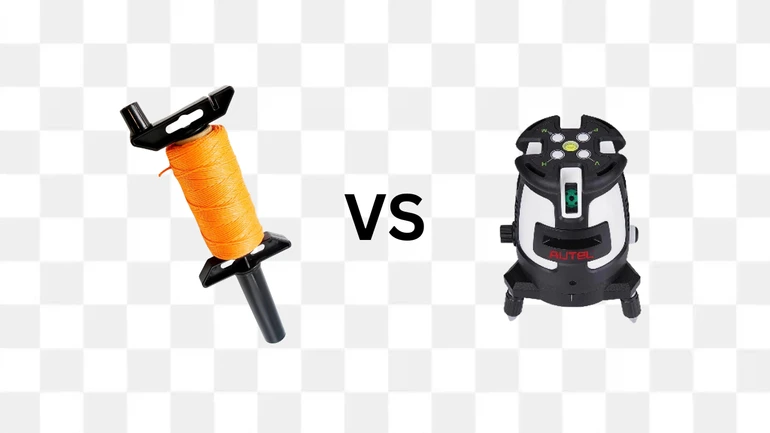
If you've spent any time doing ADAS calibrations, you've worked with both tools. Construction string has been a fixture of calibration setups for years, and laser levels have steadily become more common as shops look for ways to improve accuracy and cut down on setup time. Each approach has a legitimate place in the shop, and neither one is going away anytime soon.
What Role Do These Tools Play in ADAS Calibration?
During a static ADAS calibration, one of the most critical steps is establishing accurate reference lines from the vehicle. Technicians need to locate the vehicle's centerline, project that line outward, and position calibration targets at exact distances and angles relative to the vehicle's geometry. Any error at this stage flows directly into the calibration itself.
Construction string and laser levels both serve that purpose, but they go about it in very different ways, and the differences have real consequences on the shop floor.
Construction String: The Advantages
Construction string has one advantage that no laser level can match: a number of OEM procedures specifically call for it. When a manufacturer's procedure includes string as part of the setup method, using it isn't just a preference, it's part of following the procedure correctly.
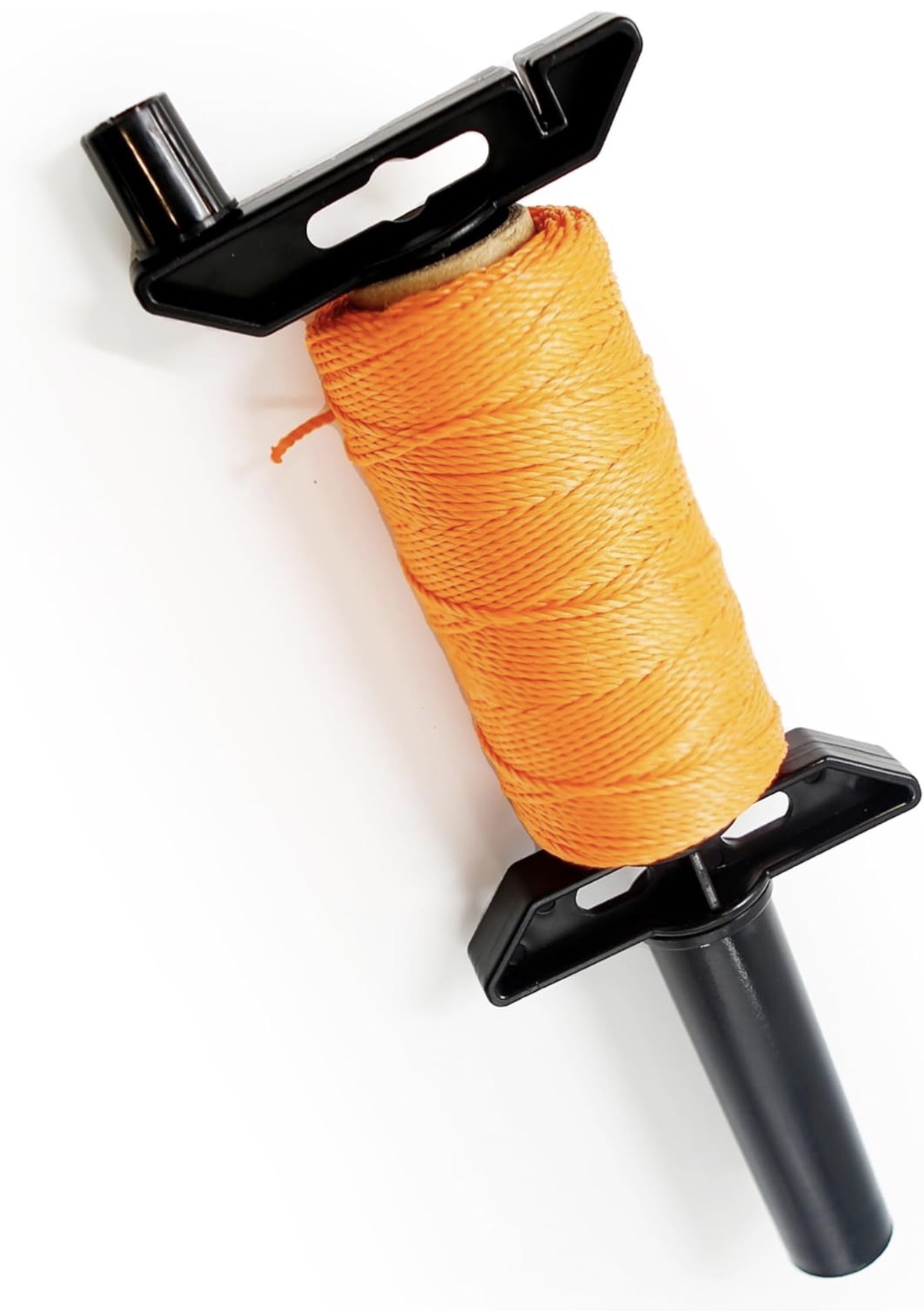
Beyond that, the practical benefits are straightforward. Construction string is inexpensive, available at any hardware store, and takes seconds to replace when a line breaks or gets contaminated. There are no batteries to run out, no charging cables to track down, and no internal components that can fail. When properly tensioned and anchored at both ends, a string line is remarkably consistent. It holds its position and doesn't drift.
String is also completely immune to ambient light conditions. In a bright shop or under direct overhead lighting that might wash out a laser beam, a string line is just as readable as in any other environment.
Construction String: The Disadvantages
Over extended distances, string has a natural tendency to develop sag or slack even when tensioned carefully, and ADAS calibrations don't leave much room for error. Moisture is another problem. Wet string behaves differently than dry string, and in a busy shop you don't always have control over those conditions.
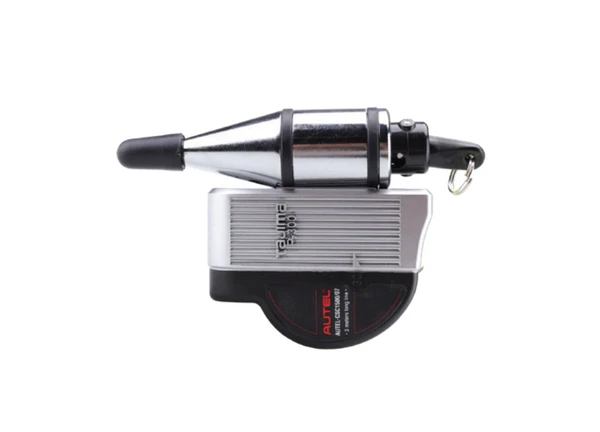
Getting a clean, usable line also usually requires a second person to hold tension while the first technician marks reference points or positions targets. An Autel Plumb Bob is a common companion to string-based setups, used to transfer the vehicle's centerline down to the shop floor before the string is run. Most construction strings also have some degree of stretch, making it unsuitable for measuring actual distances, and a tangled spool at the start of a job is a frustration anyone who has worked with it will recognize.
Laser Levels: The Advantages
A laser line is sharp, consistent, and not subject to sag, stretch, or variation based on how it was anchored. Many units include a self-leveling mechanism that automatically compensates for minor imperfections in the mounting surface, removing one more variable from the setup process.
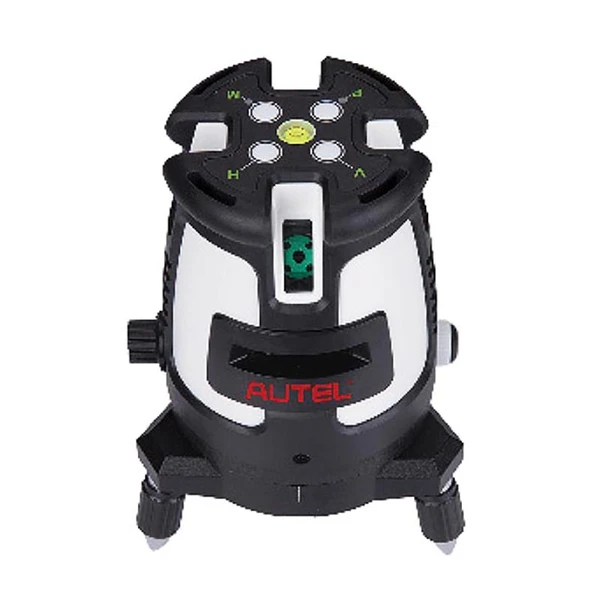
Multi-line lasers take this further. The Autel Five-Line Laser projects five lines simultaneously across three horizontal and two vertical planes, letting a single technician establish a centerline and a precise 90-degree reference at the same time. For simpler centerline tasks, the Autel Two-Line Laser is a compact option that attaches magnetically to the calibration frame and is particularly useful for speeding up front radar and windshield camera calibrations. Pairing either unit with an Autel Laser Reflective Board improves line visibility under bright shop lighting and helps confirm the vehicle centerline accurately.
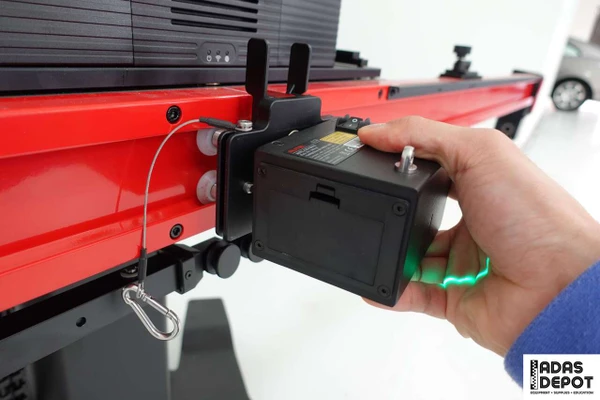
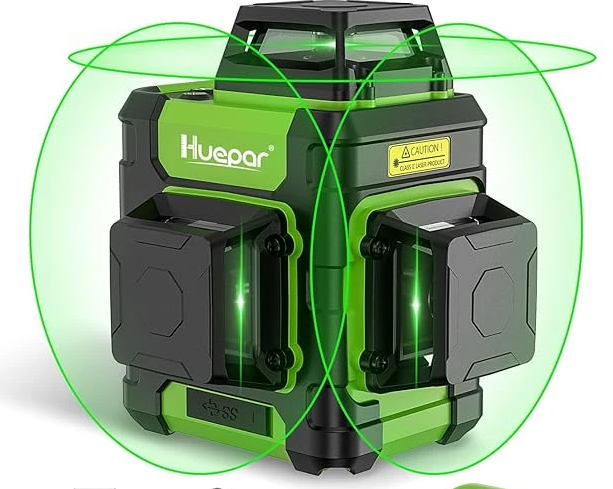
Because the laser line holds itself once the unit is positioned, one-person operation is the norm. No second technician needed to hold tension. For shops that want everything in one purchase, the Autel ADAS Accessory Package includes the Five-Line Laser, Two-Line Laser, Laser Assist Mirror, Plumb Bob, Reflective Board, and an L-shaped bracket in a single carrying case.
Browse the full range of laser tools at here.
Laser Levels: The Disadvantages
Power consumption is the most persistent issue. Multi-line models with self-leveling mechanisms draw more power than you might expect, and batteries running down mid-setup is a real disruption on a busy calibration day.
The self-leveling mechanism is also a vulnerability. It's a precision pendulum-based system that doesn't respond well to being dropped. A laser that takes a hard impact may continue to appear functional while no longer leveling accurately, which is a dangerous failure mode because the error won't be immediately obvious. These tools need to be handled carefully and checked periodically.
Visibility under intense lighting can also be a problem, and the cost of entry is meaningfully higher than a spool of string. For shops just getting started with ADAS, that upfront investment is a real consideration even if the efficiency gains pay it back over time.
Using Both Tools in Your Shop
For most shops, construction string and laser levels are complementary rather than competing. String remains necessary for any procedure where the OEM specifically calls for it, and its simplicity and near-zero cost make it a useful backup even in shops that have invested in lasers. Laser levels bring accuracy and efficiency gains that make a measurable difference at any significant volume of calibrations.
The most important thing, regardless of which tool you're using, is understanding its limitations. A poorly anchored string line and a laser level with a compromised self-leveling mechanism can both produce bad data, and bad data means the vehicle leaves your shop with a calibration that was off before the scan tool made a single adjustment.
If you're not sure which system fits your operation or want to talk through the options, reach out to the ADAS Depot team directly. We work with shops at every stage of this transition and can help you find the right fit without overbuying or underinvesting.
