
One question we hear from collision and glass shops more than almost any other is simple: “What should we charge for ADAS calibrations?”
Pricing in this space is not standardized, and every shop works within different overhead, insurer expectations, and OEM requirements. Even so, there are reliable patterns that help you set confident, defensible pricing and get paid consistently for the work you complete.
This guide outlines how shops establish calibration rates, what insurers often approve, and where most pricing falls in today’s market.
What Affects ADAS Calibration Pricing?
Every shop enters this market with different overhead, workflow, and insurer mix, but most pricing strategies center on these factors:
1. Local Insurance Reimbursement Patterns
Every region develops its own reimbursement norms. Insurers tend to approve pricing that aligns with what similar shops in the area submit. Checking dealership pricing also helps you understand the upper end of the market. Many dealerships start around $400–$500+ per calibration, depending on the system and the vehicle.
Knowing the local range helps prevent undercharging or setting a price so low that insurers question the legitimacy of the work
2. OEM Requirements & System Complexity
Some calibrations are straightforward. Others involve dual procedures, detailed target setups, or tight tolerances that take more time and attention. OEM documentation usually outlines exactly what is required, and that complexity should be reflected in your pricing.
Systems like radar, blind spot, or 360° cameras often fall at the higher end of the range due to the level of precision involved.
3. Your Shop’s Overhead & Investment
An ADAS bay depends on controlled lighting, open floor space, proper measurement tools, approved targets, and updated diagnostic software. Technicians need training, and documentation takes time. Calibration pricing needs to support these realities. When priced correctly, ADAS work becomes a strong revenue source for both small and large shops.
Setting Calibration Prices That Insurers Are More Likely to Approve
Insurance disputes often come down to documentation rather than the price itself. Shops that get paid consistently tend to follow a few practical habits.
Clear documentation helps adjusters understand the repair.
Pre-scans, post-scans, setup photos, and references to OEM procedures show why the calibration was necessary and how it was performed. When your paperwork is complete, pricing concerns tend to fall away.
OEM-backed steps validate the labor.
When the work listed on your invoice mirrors the steps in the OEM instructions, adjusters usually feel confident approving the charge. It reinforces that the calibration was required for a safe and complete repair.
Pricing that matches local trends faces less resistance.
Rates that fall within the typical regional range tend to receive faster approvals, especially when supported by thorough documentation.
Early communication prevents unnecessary follow-up.
If a calibration involves unusual conditions or extended setup time, notifying the insurer early helps avoid delays once the invoice is submitted.
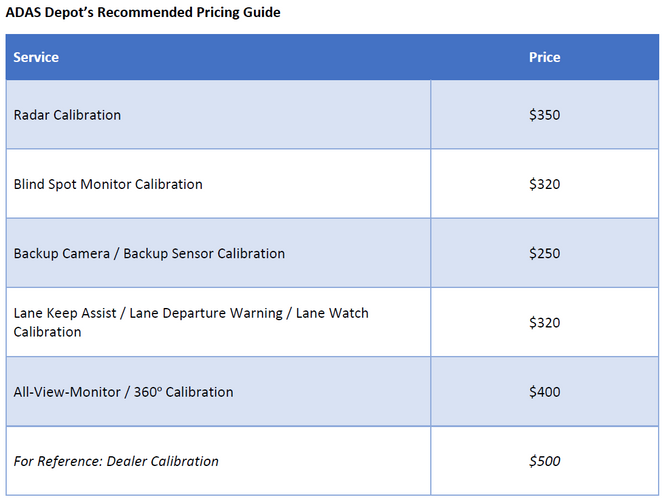
ADAS Depot’s Recommended Pricing Guide
These ranges come directly from what our customers report billing successfully and what insurers commonly approve when documentation is strong. Treat these numbers as starting points and adjust based on your market and volume.
| Service | Recommended Price Range |
|---|---|
| Radar Calibration | $300–$400 |
| Blind Spot Monitor Calibration | $300–$400 |
| Backup Camera / Backup Sensor Calibration | $250–$300 |
| Lane Keep Assist / Lane Departure Warning Calibration | $300–$400 |
| 360° / All-View Monitor Calibration | $350–$450 |
| Typical Dealership Pricing (for comparison) | $400–$500+, often higher |
These ranges place your shop comfortably below dealership pricing while still supporting a profitable ADAS workflow.
Why Proper Pricing Matters More Than Ever
Calibrating ADAS systems is not a quick diagnostic task. It involves careful preparation, cleaning and verifying sensor conditions, placing targets with exact measurements, creating a level environment, completing static or dynamic procedures, running scans, and documenting each step.
All of this is essential for safety. Underpricing forces shops to absorb costs that should be included in the calibration charge. When the service is priced correctly, ADAS work becomes both sustainable and profitable.
When Calibrations Are Typically Required
Shops see calibration needs in familiar scenarios such as:
- Windshield replacements
- Camera or radar removal
- Front- or rear-end collision repairs
- Bumper repairs involving radar units
- Alignments or suspension work
- Module programming that affects ADAS systems
Each of these events may alter sensor position or visibility, which is why calibrations are considered a required part of the repair.
Smoother Reimbursement Through Better Documentation
The shops that get reimbursed quickly tend to approach documentation as part of the calibration rather than a separate chore. They capture photos during check-in, document the calibration setup before starting, and attach both scans to the final invoice. The result is a clear, complete package that adjusters can interpret without delay.
When insurers see exactly what was repaired, why a calibration was required, and how it was performed, reimbursement becomes far more predictable.
Build Confidence in Your ADAS Pricing
Calibrations continue to become a larger part of modern repair workflows. With strong documentation, consistent processes, and pricing that aligns with your work, ADAS services can be both reliable and profitable for your shop.
Frequently Asked Questions
What should shops realistically charge for ADAS calibrations?
Most shops land in the $250–$450 per system range. Your market, insurer mix, and OEM requirements will influence the final number.
Why are dealership calibration prices higher?
Dealerships often begin around $400–$500+ because of higher facility costs, brand-specific equipment, and OEM-driven workflows.
How do I justify calibration pricing to an insurance company?
Clear documentation, including scans, setup photos, and OEM references, helps adjusters understand the service and supports your rate.
Will insurers reimburse every calibration if I document correctly?
Strong documentation greatly improves approval rates. Some insurers may still adjust pricing, but missing documentation is one of the most common reasons for a denial.
Should I break out pre-scans, post-scans, and calibration labor separately?
Yes. These steps reflect different parts of the repair and should appear as separate line items.
